 dgmads
In short
- Why come: lower costs than Vilnius, fast internet, EU and Schengen, interwar modernist architecture listed by UNESCO.
- Where to work: cafés and coworkings along Laisvės alėja, more desks near the KTU campus, public and university libraries.
- Where to live: Naujamiestis for convenience, the Old Town for character, Žaliakalnis for quiet, Šančiai for lower rents.
- Getting in: Kaunas Airport (KUN), about half an hour by bus; Vilnius Airport is an hour away by train.
- Best months: May to September; September is lively as students return. Winters are cold and dark.
- Community: student-driven and friendly; local groups publish their events on dgmads.
Why digital nomads choose Kaunas
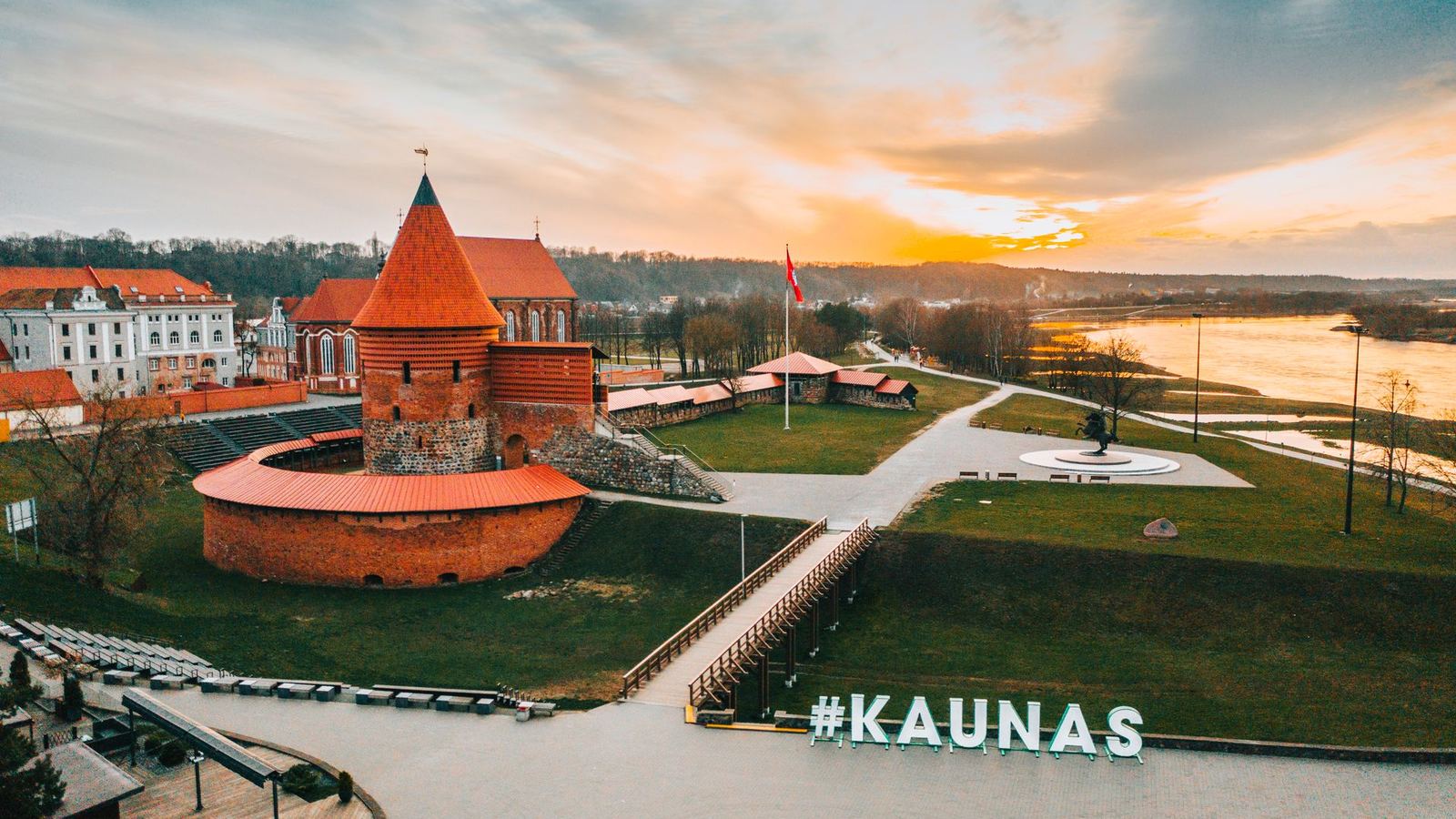
Kaunas is home to about 300,000 people, at the point where the Neris flows into the Nemunas. Between the two world wars it served as Lithuania's capital, and the modernist buildings from that period were added to the UNESCO World Heritage List in 2023. In 2022 it was a European Capital of Culture.
For remote workers, the appeal is a calmer, more affordable version of Lithuanian city life. Rent and eating out cost noticeably less than in Vilnius, the internet is just as fast, and most cafés and coworkings sit within a few minutes of Laisvės alėja, the long pedestrian avenue that runs through the centre.
Kaunas is above all a student city, with three large universities, so it is lively in term time and slower in July and August. English is common among younger people. The trade-off, as everywhere in the Baltics, is a long, cold and dark winter.
| Kaunas in short | |
|---|---|
| Climate | Cold, snowy winters; warm, green summers along the rivers |
| Cost of living | Lower than Vilnius, low for the EU |
| Internet | Fast, inexpensive fibre; good 4G / 5G coverage |
| Getting there | KUN airport with low-cost flights; trains to Vilnius in about an hour |
| Language | Lithuanian; English common among students and younger people |
| Time zone | EET / EEST, one hour ahead of Berlin |
| Best for | Nomads who want low costs, a student vibe and an easy pace |
Where to work remotely in Kaunas
Kaunas is easy to read: most work spots line up along Laisvės alėja and the streets around it. The Kaunas page on dgmads has the full map.
- Coworking spaces. A handful in the centre, more in the eastern districts near the Kaunas University of Technology (KTU) campus. Expect monthly desks, meeting rooms and, in some, soundproof rooms for calls.
- Laptop-friendly cafés. The avenue and its side streets have plenty of cafés where an afternoon with a laptop is normal, many in interwar buildings.
- Libraries. Kaunas County Public Library has free reading rooms; university libraries mainly serve their students.
Coworkings on the dgmads map: Workland Laisvės on Laisvės alėja, with great Wi-Fi and soundproof areas; Redakcija Co-Working on E. Ožeškienės street; Kauno Spiečius on I. Kanto street, which opens early; DesignFriends, PIXEL HUB and KONVERSUS near the KTU campus; and FaBrik across the Neris on Raudondvario road.
Cafés our team checked, all with Wi-Fi and outlets: Habits Coffee House and CAFFEINE on Laisvės alėja, both opening early; Caif cafe on K. Donelaičio street; Kavalierius on I. Kanto street; Vero Cafe on Vytauto Avenue; and, in the Old Town, Coco's Café on M. Daukšos street.
Venues on the dgmads map in Kaunas were checked by our team for Wi-Fi, outlets, noise and how long you can comfortably stay. dgmads is in Alpha and Beta sign-ups are open.
Best neighbourhoods in Kaunas for digital nomads
The centre of Kaunas is a narrow strip between the rivers and the hills, so living centrally means walking almost everywhere. Two funiculars climb the slopes to Žaliakalnis and Aleksotas.
| Area | Vibe | Good for |
|---|---|---|
| Naujamiestis / Laisvės alėja | Interwar new town, cafés, coworkings, modernist buildings | Convenience and short walks to everything |
| Old Town (Senamiestis) | Castle, Town Hall square, Vilniaus gatvė | Character and evenings out |
| Žaliakalnis | Green hill, interwar villas, Ąžuolynas oak park | Quiet long stays and runners |
| Šančiai | Former military and working-class district, wooden houses | Lower rents and a creative, local feel |
| Aleksotas | Across the Nemunas, views over the Old Town | Calm, residential living |
Ask about heating before you sign. In older blocks on district heating, winter bills are much higher than summer ones.
Internet and SIM cards in Kaunas
Fibre is widespread in Lithuania, and Kaunas is no exception: home connections are usually fast, including in Soviet-era blocks. Long-stay rentals almost always include Wi-Fi, but a quick speed test before signing never hurts.
Prepaid SIMs from Telia, Bitė and Tele2 are sold in supermarkets and kiosks and come with generous data. EU SIMs work under EU roaming rules for normal use, and a local SIM as a hotspot is a cheap backup for important calls.
Visas: can you stay in Kaunas as a digital nomad?
EU and EEA citizens can live and work in Lithuania without a visa, and register their residence with the Migration Department if they stay longer than three months.
Non-EU citizens from visa-exempt countries can usually stay up to 90 days in any 180 in the Schengen area. Longer stays need a national (D) visa or a temporary residence permit, for example for employment, self-employment or a startup. Lithuania is not known for a dedicated digital nomad visa.
Rules change. Check the current options with the Migration Department or a Lithuanian embassy before planning a long stay.
Getting to and around Kaunas
Kaunas Airport (KUN) is in Karmėlava, about 15 km north-east of the centre, with low-cost flights to many European cities. City buses reach the centre in around half an hour. If your flight lands in Vilnius, the train from Vilnius to Kaunas takes about an hour.
In town, the centre is walkable and flat until you hit the hills, where the funiculars help. Buses and trolleybuses cover the rest of the city, and shared scooters and ride-hailing apps are easy to find. The railway and bus stations sit side by side at the southern edge of Naujamiestis.
The digital nomad community in Kaunas
The international crowd in Kaunas is built around the universities: Erasmus students, medical students at the Lithuanian University of Health Sciences (LSMU), researchers and staff at KTU and Vytautas Magnus University (VMU). Remote workers are fewer than in Vilnius, which makes it easier to get to know them.
Language cafés, Erasmus parties, sports clubs and cultural events run through the year, and coworkings such as Kauno Spiečius and Redakcija Co-Working bring together local founders and freelancers.
Local communities publish their meetups on dgmads, so the events in Kaunas page is the quickest way to see what is on this week.
When to come: Kaunas season by season
| Season | What to expect |
|---|---|
| Spring (Mar to May) | Cold start, then terraces open along Laisvės alėja and the parks turn green. |
| Summer (Jun to Aug) | Long days, river beaches and open-air events; quieter in the centre while students are away. |
| Autumn (Sep to Nov) | Students return and the city fills up again; cooler and darker from October. |
| Winter (Dec to Feb) | Cold, snowy and dark by late afternoon. Christmas lights in the Old Town, cosy cafés. |
Weekend trips from Kaunas
- Pažaislis Monastery and the Kaunas Reservoir, within the city: baroque church, lakeside walks and sailing.
- Rumšiškės, home of the Lithuanian Open-Air Museum, a short drive east.
- Birštonas, a small spa town in a bend of the Nemunas.
- Vilnius and Trakai, an hour or so away. See our Vilnius page.
- Klaipėda and the Curonian Spit, for dunes and Baltic beaches, a longer trip west.
In town, do not miss the Ninth Fort, the M. K. Čiurlionis National Art Museum and the view from the Church of Christ's Resurrection in Žaliakalnis.
Questions people ask
Is Kaunas good for digital nomads?
Yes, if you want a cheaper, calmer base than Vilnius with the same fast internet and euro prices. Kaunas has a walkable centre, a growing choice of cafés and coworkings, a low-cost airport and a large student population. Winters are long and dark, and summers quieter while students are away.
Where do digital nomads work in Kaunas?
In coworkings on and around Laisvės alėja and near the KTU campus, in laptop-friendly cafés along the avenue and in the Old Town, and in the reading rooms of Kaunas County Public Library. The dgmads map lists venues checked for Wi-Fi, outlets and noise.
Kaunas or Vilnius for digital nomads?
Vilnius has a bigger international and tech scene and more choice of coworkings. Kaunas is cheaper, quieter and more student-driven, with its own low-cost airport. They are about an hour apart by train, so many nomads base themselves in one and visit the other.
Which neighbourhood is best for digital nomads in Kaunas?
Naujamiestis, around Laisvės alėja, for cafés and coworkings on your doorstep; the Old Town for character; Žaliakalnis for quiet streets on the hill; Šančiai for lower rents. Ask about winter heating costs before you sign a lease.
Does Lithuania have a digital nomad visa?
Lithuania is not known for a dedicated digital nomad visa. EU citizens need no visa; non-EU nationals usually look at national visas and temporary residence permits for work, self-employment or startups. Rules change, so check with the Migration Department or a Lithuanian embassy.
How do I meet other nomads in Kaunas?
Join language cafés, Erasmus and sports groups, and events at coworkings such as Kauno Spiečius. Local communities publish their events on dgmads, on the events page of Kaunas, so you can find one in your first days in the city.
Is Kaunas safe for digital nomads?
Kaunas is generally considered a safe city. Take the usual care at night in quiet areas and with belongings in busy places, and watch out for icy pavements in winter. Most nomads feel at ease in the centre and along Laisvės alėja.
By Ivan Territo — Co-Founder · Product & Design, dgmads · LinkedIn · Published · Updated