 dgmads
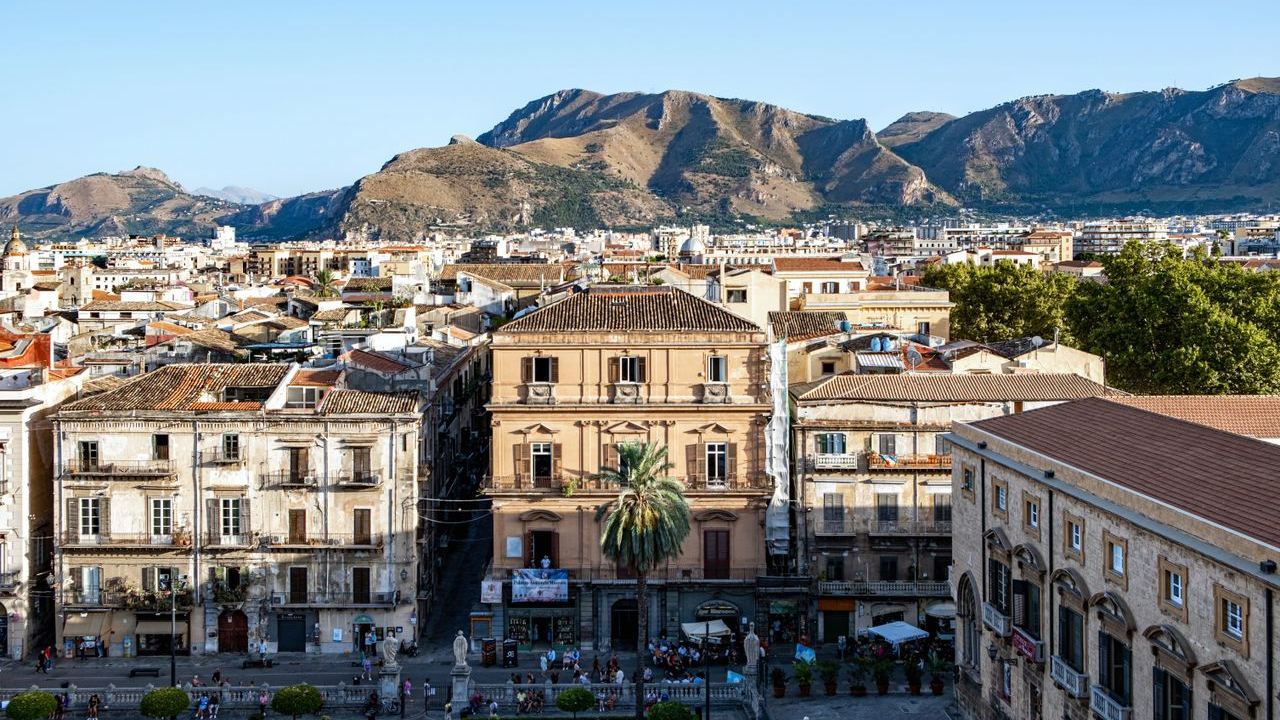
In short
- Why come: mild winters, sea within reach of the centre, low costs for Italy and a historic centre that never gets boring.
- Where to work: laptop-friendly cafés in the Kalsa and Politeama, coworking spaces in the centre, free public libraries.
- Where to live: Kalsa or Vucciria for atmosphere, Politeama / Via Libertà for calm and reliable fibre, Mondello for the beach.
- Getting in: Falcone-Borsellino airport (PMO), about an hour by train or 50 minutes by shuttle bus from the centre.
- Best months: April to June and September to November. July and August are very hot.
- Community: small and growing; local groups publish their events on dgmads.
Why digital nomads choose Palermo
Palermo is the capital of Sicily and home to about 630,000 people, more than a million counting the metropolitan area. It is big enough to have everything you need for a long stay, from fibre and coworking spaces to an international airport, and small enough to cross the historic centre on foot in half an hour.
What brings nomads here is the mix. You can work in the morning from a café in an eighteenth-century square, swim at Mondello after lunch and spend the evening at a street-food stall in Ballarò. The Arab-Norman monuments of the city are a UNESCO World Heritage Site, and the markets have been running for centuries.
Costs are the other draw. Rent, groceries, eating out and transport cost noticeably less than in Milan, Rome or Bologna, so a remote salary from northern Europe stretches a long way. The trade-off is a slower, less organised city: buses can be late, offices close early and plans change. Most people who stay a while come to like that rhythm.
| Palermo in short | |
|---|---|
| Climate | Mild winters, long hot summers, sea swimmable from late spring to autumn |
| Cost of living | Low for Italy; a central flat with good internet costs more than the local average |
| Internet | Fibre common in the centre and newer buildings; 4G / 5G coverage is good |
| Getting there | PMO airport with direct flights to most European capitals |
| Language | Italian (and Sicilian); English understood in the centre and among younger people |
| Time zone | CET / CEST, same as Berlin, Paris and Madrid |
| Best for | Nomads who want sun, sea, food and culture over a polished startup scene |
Where to work remotely in Palermo
There are three main options, and most nomads mix them during the week. Our remote work guide to Palermo goes deeper into each one.
- Coworking spaces. They cluster in the historic centre, around the Cantieri Culturali alla Zisa and near the university. Expect day passes, weekly and monthly desks, meeting rooms and, in the better ones, air conditioning that actually copes with July.
- Laptop-friendly cafés. Bars open early and stay busy all day, but only some welcome laptops for hours. Look for outlets, stable Wi-Fi and tables away from the counter; the Kalsa and the Politeama area have the highest density.
- Libraries. The Biblioteca Comunale at Casa Professa and the regional library on Corso Vittorio Emanuele are free, silent and set in historic buildings. Good for focus, not for calls.
A few that the dgmads team has checked in person, all with fast Wi-Fi: VERA coffee break, in the city centre on Via Generale Magliocco, for excellent coffee and café treats; CUMA Natural Bar & Fresh Market, also central, on Via Giovan Battista Guccia, for organic, natural food; TÉCO, on Via Garibaldi near the Magione, with a wide selection of teas and outlets at the tables; Ballarak Magione, a brewery that works as a coworking space during the day; and Sabir, in the Politeama area, where you can work on your laptop over excellent cocktails.
The venues on the dgmads map in Palermo were checked in person by our team: Wi-Fi, outlets, noise and how long you can comfortably stay. dgmads is in Alpha and Beta sign-ups are open.
Best neighbourhoods in Palermo for digital nomads
Where you sleep shapes your stay more than anything else. Palermo's historic centre is beautiful and lively, but it is also noisy and some old buildings have thick walls that kill Wi-Fi. Newer districts are calmer and better connected, with less charm. Here is how the main areas compare.
| Area | Vibe | Good for |
|---|---|---|
| Kalsa | Old Arab quarter by the sea, cafés and small squares | First-timers who want atmosphere and walkable everything |
| Vucciria / Capo | Historic market streets, loud and full of character | Night owls and street-food lovers |
| Ballarò / Albergheria | Oldest market, multicultural, near the station | Tight budgets and real neighbourhood life |
| Politeama / Via Libertà | Wide avenues, shops, newer buildings | Long stays, calls and reliable fibre |
| Borgo Vecchio | Between the port and Politeama, busy evenings | A central base slightly off the tourist track |
| Mondello | Beach suburb about 11 km north | Summer stays when the sea comes first |
Before you sign anything, ask the host for a speed test screenshot or a video call from the flat. In palazzi with thick stone walls, the router's position matters as much as the line.
Internet and SIM cards in Palermo
Fibre to the home is widespread in the centre and in the districts built after the war, and most rentals aimed at long stays advertise it. Older buildings may still rely on slower copper lines, so check rather than assume.
Mobile coverage is good across the city, with 4G everywhere and 5G in much of the centre. The main Italian operators all sell prepaid SIMs with generous data; you need a passport and, for some offers, a codice fiscale (the Italian tax code). An eSIM from home works for the first days, and a local SIM as a hotspot is a good backup for important calls.
Visas: can you stay in Palermo as a digital nomad?
EU citizens can live and work in Palermo without a visa. After three months they are expected to register their residence at the Comune, which requires proof of work or income and health cover.
Non-EU citizens from visa-exempt countries can usually stay up to 90 days in any 180 in the Schengen area as tourists. For longer stays, Italy introduced a digital nomad and remote worker visa in 2024, aimed at highly qualified professionals who work for themselves or for companies abroad. It asks for a minimum annual income, health insurance, accommodation and relevant experience.
Visa rules and income thresholds change. Check the current requirements with the Italian consulate in your country before booking a long stay. Our expat guide to Palermo explains the paperwork once you arrive.
Getting to and around Palermo
Falcone-Borsellino airport (PMO) sits at Punta Raisi, about 35 km west of the city, with direct flights to most European capitals. The Trinacria Express train reaches Palermo Centrale in about an hour, and a shuttle bus runs to Politeama and the station in around 50 minutes.
In town, the centre is best on foot. AMAT runs the city buses and a tram network towards the outer districts, and the urban railway connects the airport line with stations such as Notarbartolo. Regional trains run along the coast to Cefalù and on to Messina. You do not need a car; much of the centre is a limited-traffic zone (ZTL) anyway.
The digital nomad community in Palermo
Palermo's nomad scene is smaller than Lisbon's or Las Palmas', and that is part of its appeal: people actually talk to each other. You will find language exchanges, coworking days, aperitivi, hikes on Monte Pellegrino and weekend trips, busier from spring to autumn.
After work, two places where the community often meets: the beer garden of Ballarak Magione, a brewery near the Kalsa with music and events, and Sabir, a cocktail bar in the Politeama area with comfortable seating that stays open late.
Local communities publish their meetups on dgmads, so the events in Palermo page is the quickest way to see what is on this week. If you run a community yourself, a dgmads community page gives you a public calendar and sign-ups.
When to come: Palermo month by month
| Season | What to expect |
|---|---|
| Spring (Apr to Jun) | Warm days, flowers on the hills, sea warming up. Many nomads' favourite time. |
| Summer (Jul to Aug) | Very hot, especially with the scirocco wind. Beach life, festivals, the Festino di Santa Rosalia in mid-July. Work early, rest midday. |
| Autumn (Sep to Nov) | The sea stays warm into October, crowds thin out, prices drop. Great for long stays. |
| Winter (Dec to Mar) | Mild and often sunny, with rainy spells. Quiet, cheaper, and homes can feel cold: ask about heating. |
Weekend trips from Palermo
- Monreale, on the hill above the city, for its cathedral mosaics.
- Cefalù, about an hour by train along the coast: beach, old town and the rock above it.
- Mondello and Capo Gallo, for swimming and a coastal nature reserve close to town.
- Scopello and the Zingaro reserve, for coves and coastal walks west of Palermo.
- Ustica, a small volcanic island reached by ferry and hydrofoil from the port.
And between trips, eat like a local: arancine, panelle, sfincione and cannoli, ideally at the markets of Ballarò, Capo and Vucciria.
Questions people ask
Is Palermo good for digital nomads?
Yes, for people who value sun, sea, food and culture over a polished startup scene. Palermo has low costs for Italy, fibre in much of the centre, a growing choice of cafés and coworking spaces and direct flights across Europe. It is less organised than northern Italy, which many nomads end up enjoying.
Where do digital nomads work in Palermo?
In coworking spaces in the historic centre and near the university, in laptop-friendly cafés around the Kalsa and Politeama, and in free libraries such as the Biblioteca Comunale at Casa Professa. The dgmads map lists venues checked in person for Wi-Fi, outlets and noise.
Which neighbourhood is best for digital nomads in Palermo?
The Kalsa for atmosphere and walkability, Politeama and Via Libertà for quieter streets and reliable fibre, Vucciria and Capo for nightlife, Mondello for summer by the sea. Always check the internet speed of a flat before you sign.
Is the internet fast enough for remote work in Palermo?
Usually, yes. Fibre to the home is common in the centre and newer buildings, and 4G / 5G coverage is good. Older palazzi can have slow lines or thick walls, so ask for a speed test and keep a local SIM as a hotspot backup.
Does Italy have a digital nomad visa?
Yes. Since 2024 Italy has a visa for digital nomads and remote workers, for highly qualified non-EU professionals with a minimum income, health insurance and accommodation. EU citizens do not need it. Requirements change, so check with the Italian consulate before applying.
How do I meet other nomads in Palermo?
Join language exchanges, coworking days and aperitivo meetups, which run all year and more often from spring to autumn. Local communities publish their events on dgmads, on the events page of Palermo, so you can find one in your first days.
Is Palermo safe for digital nomads?
Palermo is about as safe as other large southern European cities. Take the usual care with phones and bags in crowded markets and on buses, and with quiet side streets late at night. Most nomads feel at ease in the centre.
By Ivan Territo — Co-Founder · Product & Design, dgmads · LinkedIn · Published · Updated