 dgmads
In short
- Why come: a compact, bike-friendly city with eight UNESCO-listed early Christian monuments, the Adriatic nearby and low costs for northern Italy.
- Where to work: the Biblioteca Classense, the upper floor of the Mercato Coperto, coworking spaces in the Darsena and the centre.
- Where to live: the historic centre for everything on foot, the Darsena for newer flats, the beach towns in summer.
- Getting in: no airport in town; Bologna (BLQ) is the main gateway, Forlì (FRL) and Rimini (RMI) are closer with fewer flights.
- Best months: May, June and September. Winter is quiet and often foggy.
- Community: small and friendly; local groups publish their events on dgmads.
Why digital nomads choose Ravenna
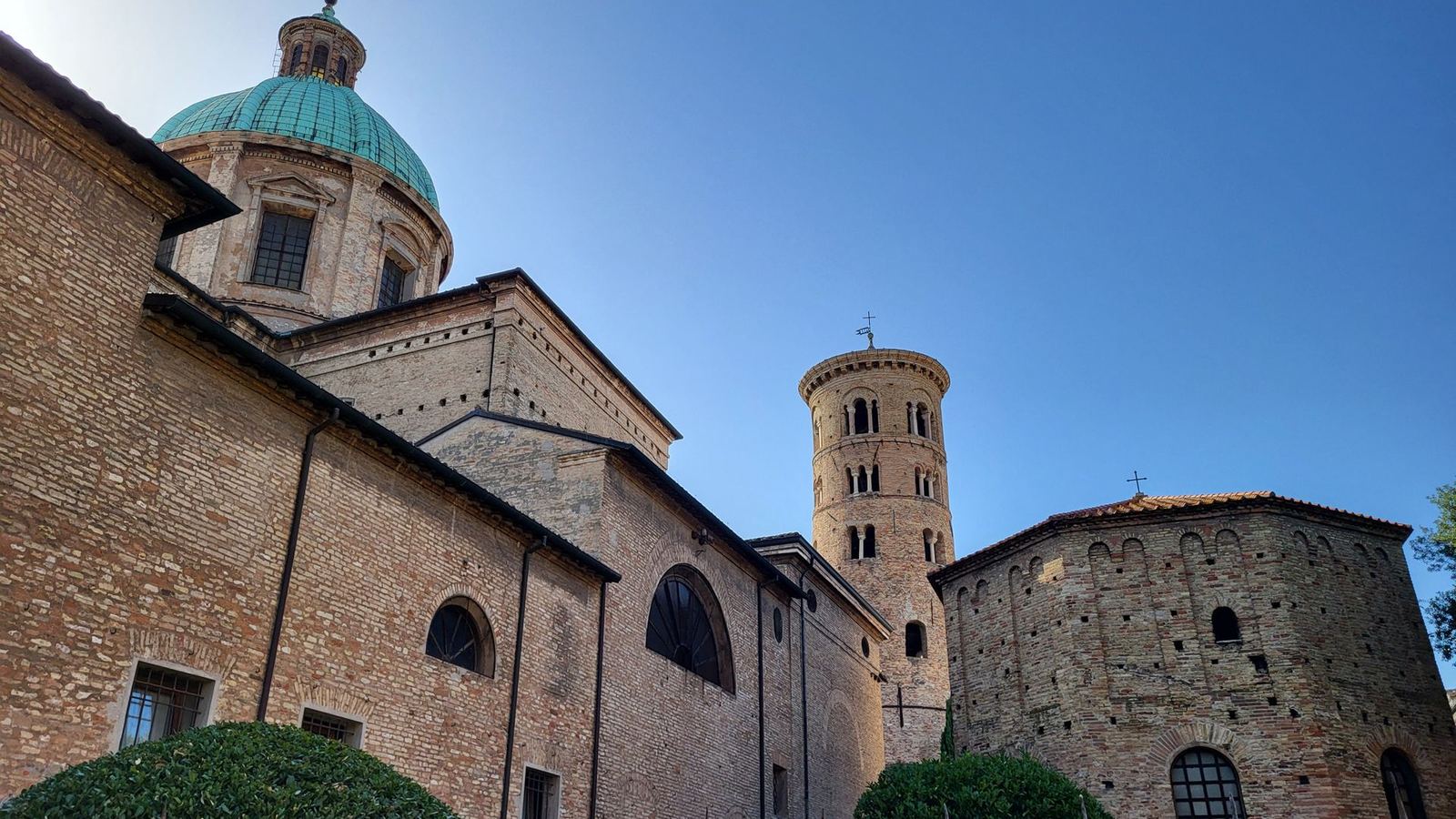
Ravenna is a city of about 155,000 people in Emilia-Romagna, a few kilometres inland from the Adriatic. It was a capital of the Western Roman Empire and of the Ostrogothic kingdom, and later the seat of Byzantine power in Italy. Eight of its early Christian monuments, famous for their mosaics, are a UNESCO World Heritage Site, and Dante is buried here.
For remote workers the appeal is the pace. The centre is flat and compact, most people get around by bike, and the beaches of Marina di Ravenna and the other seaside towns are a short ride away. The University of Bologna has a campus here, so there are students, libraries and study spaces year-round.
Costs are low for northern Italy, well below Bologna and far below Milan. The trade-offs: a small international scene, no airport of its own, and winters that can be grey and foggy. If you want quiet weeks of focused work with the sea and good food close by, it fits well.
| Ravenna in short | |
|---|---|
| Climate | Hot, humid summers; cool, often foggy winters, mild for the north |
| Cost of living | Low for northern Italy; well below Bologna |
| Internet | Fibre common in the centre and the Darsena; good 4G / 5G coverage |
| Getting there | Trains from Bologna; airports at Bologna (BLQ), Forlì (FRL) and Rimini (RMI) |
| Language | Italian; English understood by younger people and in the centre |
| Time zone | CET / CEST, same as Berlin, Paris and Madrid |
| Best for | Nomads who want calm, culture, bikes and the sea over a big-city scene |
Where to work remotely in Ravenna
Ravenna has fewer coworking spaces than a big city, but the free options are unusually good. Most nomads mix the library, a coworking desk and a café or two.
- Libraries. The Biblioteca Classense, in a former Camaldolese monastery on Via Baccarini, is free, quiet and central, with Wi-Fi and outlets. It is also the main study hall for students, so it fills up during exam periods.
- Coworking spaces. Darsena Multi Spazio, on Via Magazzini Anteriori in the old dock area, has great Wi-Fi, meeting rooms and private areas, and opens early. Cre.S.Co Coworking, on Via Sant'Agata in the centre, adds a shared kitchen, printing and meeting rooms.
- Study and work areas. On the upper floor of the Mercato Coperto, the renovated covered market on Piazza Andrea Costa, there is an area with tables, armchairs and Wi-Fi made for studying and working.
For cafés, the dgmads team has checked Milk - Coffee & Friends, near the Darsena on Via delle Industrie, air-conditioned with comfortable seating, outlets and Wi-Fi into the evening, and Grinder Coffee Lab on Via di Roma, with Wi-Fi, breakfast and lunch, open early. Cafés here are relaxed but small, so pick quiet hours and order regularly.
The venues on the dgmads map in Ravenna were checked in person by our team: Wi-Fi, outlets, noise and how long you can comfortably stay. dgmads is in Alpha and Beta sign-ups are open.
Best areas in Ravenna for digital nomads
Ravenna is small enough that almost anywhere in town is a short bike ride from the centre. The real choice is between the old town, the regenerated docks and the coast.
| Area | Vibe | Good for |
|---|---|---|
| Centro storico | Piazza del Popolo, mosaics, Dante's tomb, cafés | Having the library and everything else on foot |
| Darsena | Converted warehouses along the canal, newer flats and bars | Coworking nearby and a more modern feel |
| Borgo San Rocco | Traditional residential quarter just outside the walls | Calm, everyday life a few minutes from the centre |
| San Biagio | Residential, parks and supermarkets | Long stays and families |
| Marina di Ravenna | Seaside town about 10 km east, sandy beaches | Summer stays; very quiet in winter |
Rent a bike or bring your own: it is the fastest way around town. Ask the host for a speed test and, for winter, check how the flat is heated.
Internet and SIM cards in Ravenna
Fibre to the home is common in the centre and in the newer buildings of the Darsena, and most rentals for long stays advertise it. Older houses may still be on slower lines, and coverage in the countryside and some beach areas is patchier, so check before you book.
Mobile coverage is good across the city, with 4G everywhere and 5G in much of the centre. All the main Italian operators sell prepaid SIMs with generous data; bring a passport and, for some offers, a codice fiscale (the Italian tax code). A local SIM as a hotspot is a good backup for calls from the beach.
Visas: can you stay in Ravenna as a digital nomad?
EU citizens can live and work in Ravenna without a visa. After three months they are expected to register their residence at the Comune, which requires proof of work or income and health cover.
Non-EU citizens from visa-exempt countries can usually stay up to 90 days in any 180 in the Schengen area as tourists. For longer stays, Italy introduced a digital nomad and remote worker visa in 2024, aimed at highly qualified professionals who work for themselves or for companies abroad. It asks for a minimum annual income, health insurance, accommodation and relevant experience.
Visa rules and income thresholds change. Check the current requirements with the Italian consulate in your country before booking a long stay.
Getting to and around Ravenna
Ravenna has no airport of its own. The usual gateway is Bologna Guglielmo Marconi (BLQ), about 80 km away, with flights across Europe: take the Marconi Express monorail to Bologna Centrale, then a regional train to Ravenna, just over an hour on direct services.
Forlì (FRL), about 30 km away, and Rimini (RMI), about 60 km down the coast, are closer but have fewer, often seasonal routes; check how to reach Ravenna from them before you book. Trains also link Ravenna with Rimini, Ferrara and Faenza.
In town, a bike does almost everything: the city is flat and has a growing network of cycle lanes. START Romagna buses run to the station, the Darsena and the seaside towns. You do not need a car, and much of the centre is a limited-traffic zone (ZTL).
The digital nomad community in Ravenna
Ravenna's international scene is small and made of university students and researchers, mosaic and restoration specialists and a handful of remote workers. It is easy to get to know people: language exchanges, campus nights and summer evenings at the beach are the usual starting points.
The Darsena is where much of the evening life happens. Darsenale - Bizantina Brewpub, a brewpub with an outdoor area and an event space, and Milk - Coffee & Friends, which also has room for events, are easy places to start. In June and July the Ravenna Festival fills the city with concerts and opera.
Local communities publish their meetups on dgmads, so the events in Ravenna page is the quickest way to see what is on this week. Venues and areas are on the Ravenna page.
When to come: Ravenna month by month
| Season | What to expect |
|---|---|
| Spring (Apr to Jun) | Mild, bright days ideal for cycling; beach clubs open in late spring. The Ravenna Festival starts in June. |
| Summer (Jul to Aug) | Hot and humid, with mosquitoes near the pinewoods. Lively coast, busy beaches, outdoor concerts. |
| Autumn (Sep to Nov) | September is still warm and the sea swimmable; then calm, golden days and fewer visitors. |
| Winter (Dec to Mar) | Cool, damp and often foggy, mild for northern Italy. Quiet coast, cosy centre, good for focused work. |
Weekend trips from Ravenna
- Sant'Apollinare in Classe and the Pineta di Classe, a basilica and a pinewood a short ride south of town.
- The Po Delta and Comacchio, for lagoons, birdwatching and a canal town to the north.
- Bologna, about an hour by train, for food, porticoes and a big student city.
- Ferrara, a Renaissance city with walls you can cycle around.
- Faenza and Brisighella, for ceramics and a medieval village in the hills.
Between trips, eat like a local: piadina from a roadside kiosk, cappelletti, and fish along the coast. Want something warmer in winter? Our Palermo guide covers a base in Sicily.
Questions people ask
Is Ravenna good for digital nomads?
Yes, if you want a calm, affordable Italian city with the sea nearby rather than a networking hub. Ravenna has fibre in the centre, a free monumental library, a few coworking spaces and Bologna just over an hour away by train. The downsides are a small international scene and no airport in town.
Where do digital nomads work in Ravenna?
At the Biblioteca Classense, on the upper floor of the Mercato Coperto, in coworking spaces such as Darsena Multi Spazio and Cre.S.Co Coworking, and in a few cafés with Wi-Fi. The dgmads map lists venues checked in person for Wi-Fi, outlets and noise.
Which area is best for digital nomads in Ravenna?
The historic centre if you want the library, cafés and monuments on foot, the Darsena for newer flats and coworking nearby, Borgo San Rocco or San Biagio for quiet residential streets. Marina di Ravenna works in summer. Always check the internet speed before you sign.
What is the nearest airport to Ravenna?
Forlì (FRL) is the closest, about 30 km away, and Rimini (RMI) is about 60 km, but both have fewer, often seasonal flights. Most people fly into Bologna (BLQ), about 80 km away, then take the Marconi Express to Bologna Centrale and a train to Ravenna.
Is the internet fast enough for remote work in Ravenna?
In town, usually yes. Fibre is common in the centre and the Darsena, and 4G / 5G coverage is good. Older houses and some beach and countryside areas can be slower, so ask for a speed test and keep a local SIM as a hotspot backup.
Does Italy have a digital nomad visa?
Yes. Since 2024 Italy has a visa for digital nomads and remote workers, for highly qualified non-EU professionals with a minimum income, health insurance and accommodation. EU citizens do not need it. Requirements change, so check with the Italian consulate before applying.
How do I meet other nomads in Ravenna?
Try language exchanges, university events, cycling groups and evenings in the Darsena, plus the Ravenna Festival in summer. Local communities publish their events on dgmads, on the events page of Ravenna, so you can find one in your first days even in a small scene.
By Ivan Territo — Co-Founder · Product & Design, dgmads · LinkedIn · Published · Updated