 dgmads
In short
- Why come: international, English-speaking, compact and well connected by air and rail.
- Where to work: laptop-friendly cafés in Oost, De Pijp and Oud-West, coworking spaces across the city and the OBA central library.
- Where to live: the Jordaan or De Pijp for atmosphere, Oost or Zuid for calm, Noord for space. Housing is scarce: plan early.
- Getting in: Schiphol (AMS) to Centraal in about 15 minutes by NS train; bikes, trams, metro and free ferries in town.
- When to come: late spring and early autumn. Winters are grey, summers crowded.
- Community: a large international scene; the dgmads team is mapping venues now, and local groups will be able to publish their events on dgmads.
Why digital nomads choose Amsterdam
Amsterdam is the capital of the Netherlands, home to about 930,000 people from well over a hundred countries. English is the everyday second language in shops, offices and cafés, so you can work, rent and socialise without Dutch, although a few words are always appreciated.
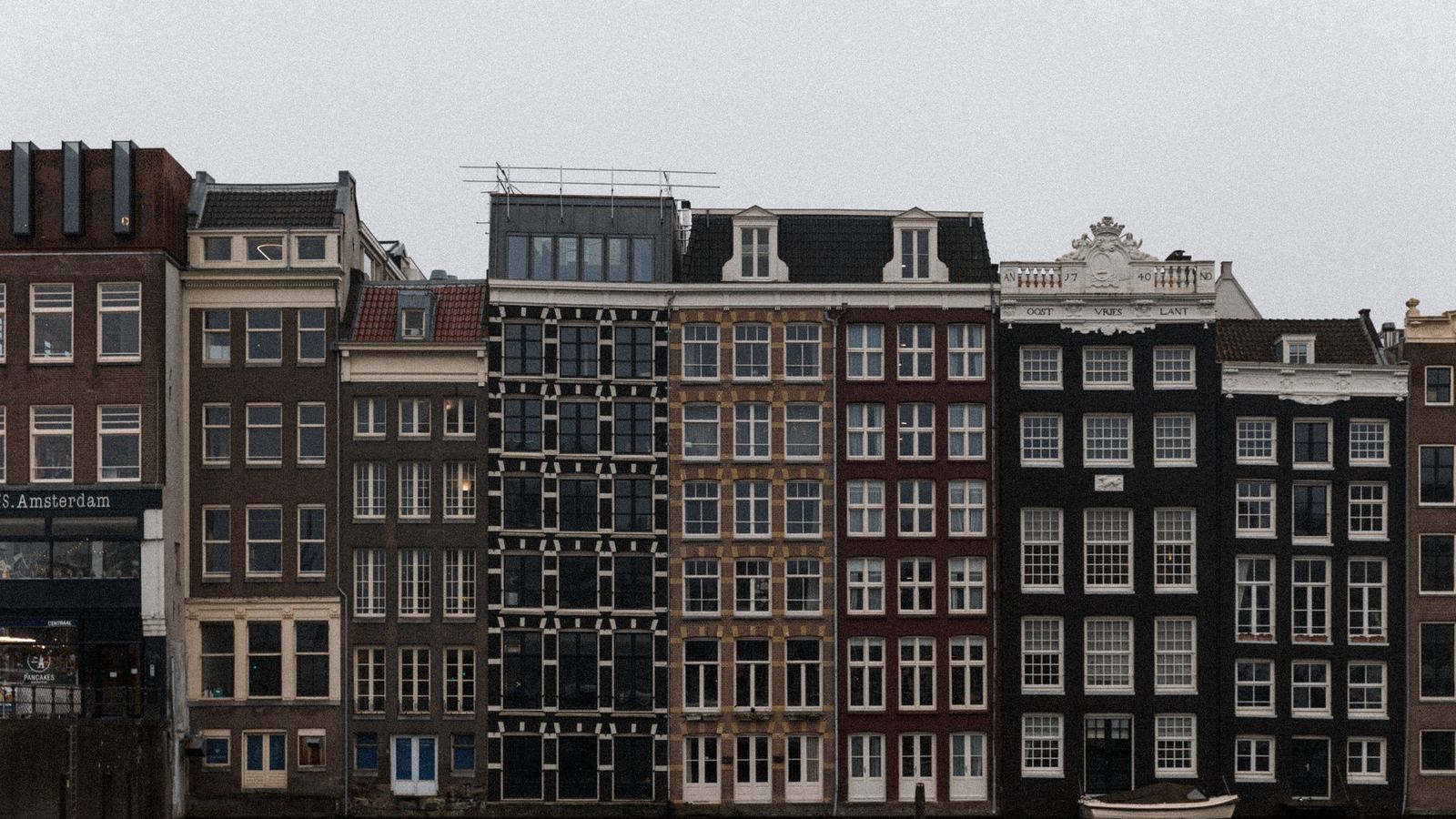
The city is made for short trips: flat, compact, laced with canals and crossed by bike. Internet is fast, cafés open early, and an international tech and startup scene means plenty of people around you work the way you do.
The catch is cost. Amsterdam is the most expensive city in the Netherlands, and the housing shortage is real: rentals are scarce, competition is fierce and the city restricts holiday rentals. Nomads who enjoy it usually arrive with a solid budget and a plan for accommodation.
| Amsterdam in short | |
|---|---|
| Climate | Mild and damp: cool grey winters, pleasant summers, rain in every season |
| Cost of living | High, the highest in the Netherlands; housing is the hardest part |
| Internet | Fast home broadband, fibre widespread, good 4G / 5G |
| Getting there | Schiphol (AMS), a major European hub, plus international trains from Centraal |
| Language | Dutch; English spoken almost everywhere |
| Time zone | CET / CEST, same as Berlin, Paris and Madrid |
| Best for | Nomads who want an international, well-organised city and can afford it |
Where to work remotely in Amsterdam
Most nomads mix three options during the week, depending on calls, budget and mood.
- Coworking spaces. From international chains to small neighbourhood hubs, with day passes, flex desks and meeting rooms. You will find them in Zuid, Oost and West and in the former shipyards of Noord.
- Laptop-friendly cafés. Many are used to laptops on weekday mornings. Weekend brunch is another story: expect to share the table or give it up.
- Libraries. OBA Oosterdok, the central public library a short walk east of Centraal, has floors of desks, outlets and quiet areas, plus a restaurant on the top floor. It is free to enter; if you are not a member, check the Wi-Fi access rules at the desk.
The dgmads team is checking venues across the city right now, and these are among them. For coworking: Well at Work Offices in the Rivierenbuurt (Zuid), with meeting rooms; MOMA&CO in Bos en Lommer, where flex desks are rented by the day or month; Social Impact Factory, in a former chewing-gum factory in Oost; and the Werkplaats at Volkshotel on Wibautstraat, with big shared tables.
For cafés: De Ysbreeker on the Amstel at Weesperzijde, open early, with outlets and a terrace; Louie Louie by the Oosterpark, with long tables; De Kanarie Club on Bellamyplein in Oud-West; Coffee Company on Haarlemmerdijk, just north of the Jordaan; and Anne&Max on Amstelveenseweg in Zuid.
Amsterdam is being mapped now: the dgmads team visits each venue to check Wi-Fi, outlets, noise and how long you can comfortably stay, and adds it to the Amsterdam page once checked. dgmads is in Alpha and Beta sign-ups are open.
Best neighbourhoods in Amsterdam for digital nomads
Where you live shapes your stay, but in Amsterdam what you can actually find matters more. Be flexible on area and think in bike minutes, not postcodes: almost anywhere within a short ride of where you work will do. Here is how the main neighbourhoods compare.
| Area | Vibe | Good for |
|---|---|---|
| Jordaan | Canals, narrow streets, small cafés and markets | The classic Amsterdam feel on a shorter stay |
| De Pijp | Dense and lively around the Albert Cuyp market | Café work and real neighbourhood life |
| Oost | Green and multicultural around the Oosterpark | Calmer long stays, students |
| Oud-West / Westerpark | Residential, between the Vondelpark and the Westergasfabriek | A practical base with plenty of cafés |
| Noord | Across the IJ, former shipyards, more space | Creative types and anyone who likes room to breathe |
| Zuid | Smart and quiet, Museumplein and the Zuidas business district | Long stays and people working near Zuidas |
Never pay a deposit for a flat you have not seen or verified, and be wary of listings that look cheap for the area. Rental scams aimed at newcomers are common in Amsterdam.
Internet, SIM cards and payments in Amsterdam
Home broadband is fast and reliable across the city, over fibre or cable in most buildings, and furnished rentals almost always include it. Cafés and libraries usually offer free Wi-Fi, though some ask you to log in or order first.
Mobile coverage is good everywhere, with 5G in much of the city. The three networks are KPN, Vodafone and Odido, and prepaid SIMs and eSIMs are easy to get. With a SIM from another EU country, roaming rules let you use it as at home, within fair-use limits.
A practical note: many places are card-only. Debit and credit cards and phone payments work almost everywhere, while cash is accepted less and less.
Visas: can you stay in Amsterdam as a digital nomad?
EU, EEA and Swiss citizens can live and work in the Netherlands freely. If you stay longer than four months, you register with the municipality (gemeente) and receive a citizen service number (BSN), which you need for most contracts.
Non-EU citizens from visa-exempt countries can usually stay up to 90 days in any 180 in the Schengen area. The Netherlands has no dedicated digital nomad visa, so longer stays need a residence permit from the IND, the Immigration and Naturalisation Service.
Routes people look at include the residence permit for self-employed people, which assesses your business plan and what it adds to the Dutch economy, and, for US citizens, the Dutch-American Friendship Treaty (DAFT), which lets Americans work in the Netherlands as self-employed.
Immigration and tax rules change. Check current requirements with the IND, and with the Belastingdienst (the Dutch tax authority) for tax, before planning a long stay.
Getting to and around Amsterdam
Schiphol (AMS) has direct flights across Europe and to other continents. NS trains leave from the station beneath the terminal and reach Amsterdam Centraal in about 15 minutes, several times an hour, with trains through the night too.
In town, GVB runs the trams, metro, buses and the ferries across the IJ to Noord, which are free for foot passengers and cyclists. From Centraal, NS trains reach Haarlem, Utrecht, Rotterdam and The Hague, and international trains run to Brussels, Paris and Germany.
Check in, check out
Tap a contactless bank card or an OV-chipkaart when you get on and when you get off, on GVB and NS alike. Forget to check out and you pay more.
Get a bike
Rent one by the week or month, or buy second-hand. Use two locks and chain the frame to something fixed: bike theft is common.
Learn the rules
Bike lanes are for bikes, so don't walk in them. Signal turns with your arm and use lights after dark.
The digital nomad community in Amsterdam
Amsterdam's international scene is large and well organised. Every week there are tech and startup meetups, language exchanges, running and cycling groups, and borrels, the Dutch after-work drinks, where newcomers are welcome.
Remote workers tend to meet around coworking spaces and the cafés of Oost, De Pijp and Oud-West. De Ysbreeker and Volkshotel, both on our list, stay open into the evening, so work can turn into a drink.
The dgmads team is mapping Amsterdam right now. Local communities will be able to publish their meetups on dgmads, and the events in Amsterdam page will gather them in one place. If you run a community, a dgmads community page gives you a public calendar and sign-ups.
When to come: Amsterdam season by season
| Season | What to expect |
|---|---|
| Spring (Mar to May) | Tulip season and Keukenhof gardens, then King's Day in late April, when the city turns orange. Busy but lovely, and evenings get long. |
| Summer (Jun to Aug) | Long light evenings, terraces and life on the canals, Pride in early August. Peak tourist season: accommodation is hardest to find. |
| Autumn (Sep to Nov) | September is often mild; October brings the Amsterdam Dance Event. More rain and wind, fewer crowds. Good for focused stays. |
| Winter (Dec to Feb) | Short, grey, damp days and early darkness, brightened by the Amsterdam Light Festival. Cosy cafés and fewer visitors. |
Weekend and day trips from Amsterdam
- Haarlem, about 15 minutes by train: a compact historic centre around the Grote Markt and fine museums.
- Zandvoort, the nearest beach, around half an hour by train.
- Zaandam and the Zaanse Schans, north-west of the city, for green wooden houses and working windmills. In Zaandam, Café Fabriek on the Zaan waterfront is on our list for an afternoon with the laptop.
- Utrecht, about half an hour by train: canals with terraces at water level and a big student scene.
- Rotterdam and The Hague, both under an hour: bold modern architecture in one, the seat of government and the beach at Scheveningen in the other.
And between trips, eat like a local: stroopwafels, bitterballen with a borrel, raw herring from a street stall and apple pie in a brown café.
Questions people ask
Is Amsterdam good for digital nomads?
Yes, if your budget allows. English is spoken almost everywhere, internet is fast, the city is compact and bike-friendly and the international community is large. The obstacles are cost and, above all, housing: rentals are scarce, so plan accommodation before anything else.
Where do digital nomads work in Amsterdam?
In coworking spaces in Zuid, Oost, West and Noord, in laptop-friendly cafés in Oost, De Pijp and Oud-West, and at OBA Oosterdok, the central public library near Centraal. The dgmads team is checking venues in person right now and adding them to the map.
Which neighbourhood is best for digital nomads in Amsterdam?
The Jordaan and De Pijp for atmosphere and cafés, Oost and Zuid for calmer streets and parks, Oud-West and Westerpark for a practical base, Noord for more space. Given the housing shortage, stay flexible and judge by bike distance rather than postcode.
Does the Netherlands have a digital nomad visa?
No. EU, EEA and Swiss citizens need no visa. Non-EU visitors from visa-exempt countries usually get up to 90 days in 180 in Schengen; longer stays need an IND residence permit, such as the self-employed permit or, for US citizens, the DAFT route. Check current rules with the IND.
How expensive is Amsterdam for remote workers?
Expensive: it is the costliest city in the Netherlands, and housing takes the biggest share of any budget. Eating out, coworking and short-term rentals are pricey too. Groceries are more manageable, and a bike keeps transport costs low.
How do I get from Schiphol to the centre of Amsterdam?
Take an NS train from the station beneath the Schiphol terminal: Amsterdam Centraal is about 15 minutes away, with several trains an hour and a service through the night. Check in and out with a contactless bank card or an OV-chipkaart.
How do I meet other remote workers in Amsterdam?
Go to tech and startup meetups, language exchanges, sports groups and borrels, which run every week, and to events at coworking spaces. The dgmads team is mapping Amsterdam now, and local communities will be able to publish their meetups on dgmads.
By Ivan Territo — Co-Founder · Product & Design, dgmads · LinkedIn · Published · Updated