dgmads
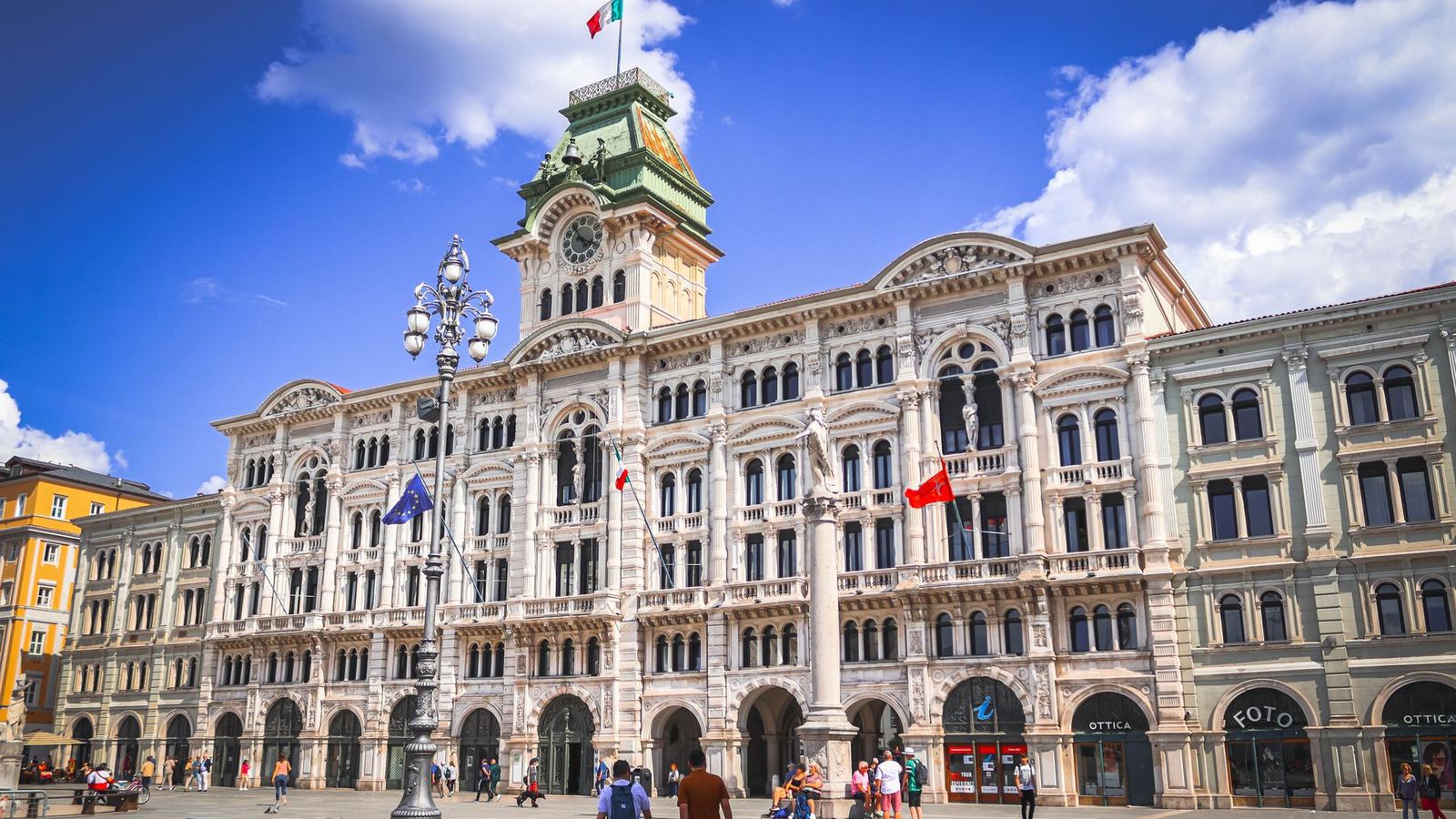
Town Hall on Piazza Unità d'Italia, Trieste
Being mapped now

Trieste for digital nomads, remote workers and researchers

Trieste sits in Italy's far north-eastern corner, squeezed between the Adriatic and the Karst plateau, with Slovenia a short bus ride away. About 200,000 people live here, and the city still feels more Central European than Italian: Habsburg boulevards, grand coffee houses where reading and writing at a table for hours is a tradition, and a bora wind that occasionally closes the seafront.

Live

Events in Trieste

No public event is scheduled right now. Communities in Trieste publish their meetups, coworking days and trips on dgmads: check back soon.

Organising something in Trieste? Send us your events at info@dgmads.com or on Instagram @dgmads_official and we will publish them.

info@dgmads.comInstagram @dgmads_official

Community

Communities in Trieste on dgmads

Besides dgmads, no community in Trieste has a dgmads page yet. Running one? With the dgmads Community plan you get a public events page with sign-ups.

Open your community page

About the city

Trieste in 30 seconds

  • A Central European port city of about 200,000 on the Adriatic, with Slovenia a short ride away.
  • Long sessions in historic coffee houses are a local tradition, not something you need to apologise for.
  • Science institutes (SISSA, ICTP, Area Science Park) keep the crowd international and English common.
  • Live in Borgo Teresiano, Cavana or San Vito; swim off the Barcola seafront in summer.
  • Trieste airport (TRS) is about 30 minutes by train; the dgmads team is mapping venues now.
ClimateBright, windy winters; warm summers
Cost of livingModerate, below Venice
InternetReliable in the centre
AirportTRS, ~30 min by train
SeaSwimming at Barcola
BordersSlovenia a short ride away

Where to work

Remote work in Trieste

Trieste sits in Italy's far north-eastern corner, squeezed between the Adriatic and the Karst plateau, with Slovenia a short bus ride away. About 200,000 people live here, and the city still feels more Central European than Italian: Habsburg boulevards, grand coffee houses where reading and writing at a table for hours is a tradition, and a bora wind that occasionally closes the seafront. Living costs are moderate, clearly below Venice or Milan.

It is also one of Italy's science capitals, with the Università di Trieste, SISSA, ICTP and the Area Science Park drawing researchers from everywhere, which keeps English common and internet infrastructure solid. Trieste airport (TRS) at Ronchi dei Legionari is thirty minutes away by train, Venice is about two hours, Ljubljana and Zagreb are easy weekend trips. Summers are warm with swimming off the rocks at Barcola; winters are bright, windy and cold.

Trieste's historic coffee houses are the natural workplaces: Caffè San Marco, with its bookshop, and the cafés of the Borgo Teresiano and Piazza Unità have hosted writers for a century and still let you sit for a long time with one coffee. Cavana and the Città Vecchia behind the Roman theatre have newer, smaller bars, and the civic library network offers quiet reading rooms. Researchers tend to work on campus or at the science institutes on the Karst. The dgmads team is visiting Trieste now, listing cafés, libraries and coworking spaces with notes on Wi-Fi, plugs and noise.

Coworking spaces in Trieste

Coworking in Trieste comes down to a handful of spaces in the centre, while researchers mostly work at SISSA, ICTP and the Area Science Park, outside the centre. Ask about day passes and, in winter, about heating. The dgmads team is checking spaces now and will add those that work for a full day.

Laptop-friendly cafés in Trieste

The coffee-house tradition means you can sit for hours in the Borgo Teresiano and around Piazza Unità without being hurried. Many historic cafés have few sockets, so arrive charged; the smaller bars of Cavana are livelier. Learn the local lingo: a 'nero' is an espresso, a 'capo' a macchiato.

Libraries and quiet places in Trieste

The Biblioteca Civica Attilio Hortis, near the old town, is the city's historic public library, with reading rooms open to everyone; bring ID. Università di Trieste libraries on the hill campus serve students. Check hours before heading up, as they shorten in summer.

Neighbourhoods

Where to stay in Trieste as a remote worker

1

Borgo Teresiano

The 18th-century grid around the Canal Grande: coffee houses, offices and the station within walking distance. Central and practical.

2

Cavana / Città Vecchia

Narrow streets below San Giusto hill and the Roman theatre, with bars, small restaurants and student life in the evening.

3

San Vito

Residential hillside with sea views and quieter streets, a short walk down to the waterfront.

4

San Giacomo

A traditional working-class neighbourhood up the hill, with lower rents, a local market and a strong identity.

5

Barcola

The seafront towards Miramare, where locals swim off the promenade in summer. Calm out of season, a bus ride from the centre.

6

Roiano

North of the station, residential and good value, with buses to the centre and the university.

Community

Digital nomads in Trieste

Thanks to the science institutes, Trieste has an unusually international population for its size: physicists, biologists and PhD students from dozens of countries, plus a long-standing Slovene community and a growing number of remote workers. People meet at institute socials, the Barcola seafront in summer, the Barcolana regatta in October and language exchanges in Cavana. Once mapping is complete, Trieste communities will be able to publish their events on dgmads.

Expats

Expats in Trieste

Trieste has absorbed newcomers for centuries, and today its international residents are mostly researchers and PhD students at SISSA, ICTP and the university, alongside a historic Slovene community and a growing number of remote workers. EU citizens register residence at the Comune after three months; non-EU citizens need a permit or the Italian digital nomad visa. English goes a long way in the science world, less so at the post office. Once mapping is complete, local groups will be able to publish their events on dgmads.

Students

Students in Trieste

The Università di Trieste has its main campus on the hill above the centre, and the city's research institutes, SISSA, ICTP and the Elettra synchrotron, bring in a large population of PhD students and postdocs from abroad. Student life gathers around Via Carducci, Cavana and the seafront bars, with Erasmus and international students well represented for a city of this size. The civic and university libraries provide free study seats close to the centre.

FAQ

Trieste for remote workers: questions

Is Trieste good for digital nomads?

Yes, for people who like sea, wind and a Central European pace. It has strong internet, an international research crowd, moderate costs and coffee houses built for long sessions. It is far from the rest of Italy, so trips elsewhere mean a couple of hours on a train, but Slovenia and Croatia are close.

Where can I work from in Trieste?

The historic cafés of the Borgo Teresiano and Piazza Unità, the smaller bars of Cavana, and the civic libraries' reading rooms. The dgmads team is mapping Trieste venues now, so the list of cafés, libraries and coworking spaces with Wi-Fi and plug notes is growing week by week.

Is there a nomad community in Trieste?

There is a strong international community, driven by the science institutes rather than by nomads as such. PhD socials, language exchanges and summer evenings at Barcola are where people meet. When mapping is complete, local communities will be able to publish their events on dgmads.

How expensive is Trieste for remote workers?

Moderate. Rents are lower than in Venice, Bologna or Milan, eating out is reasonable and the sea is free. Coworking options are fewer than in bigger cities, which pushes most people towards cafés and libraries, keeping monthly costs down. Winter heating bills are the main surprise for newcomers.

How do I get to Trieste?

Trieste airport (TRS) at Ronchi dei Legionari has its own railway station, with trains to Trieste Centrale in about half an hour. Frecciarossa and regional trains link the city with Venice in around two hours, and international buses run to Ljubljana and Croatia.

Where should I stay in Trieste as a remote worker?

The Borgo Teresiano puts coffee houses and the station on your doorstep; Cavana is livelier in the evening; San Vito and Roiano are quieter and usually cheaper. In winter, check the heating and how exposed the flat is to the bora before you sign.

What is the bora, and when is a good time to come to Trieste?

The bora is a cold north-easterly wind that can gust very hard, mostly in winter, and occasionally closes the seafront. Late spring to early autumn is the easy season, with swimming at Barcola; October brings the Barcolana regatta and its crowds.

Do I need a visa to work remotely in Trieste?

Citizens of EU countries do not. For everyone else, Italy's 2024 digital nomad visa targets highly skilled remote workers who can show income, health cover and housing. Italian consulates apply the rules and they may change, so check with yours before you plan the move.

Work from Trieste with dgmads

Our team is mapping Trieste right now. Join the Beta and be there when it opens.

Join the beta

More cities in Italy

dgmads is for

Get the dgmads app to find nomads, places and events near you.

© 2026 dgmads · All rights reserved

Share